Feminized vs Regular Cannabis Seeds: A Beginner's Guide (Without the Headache)
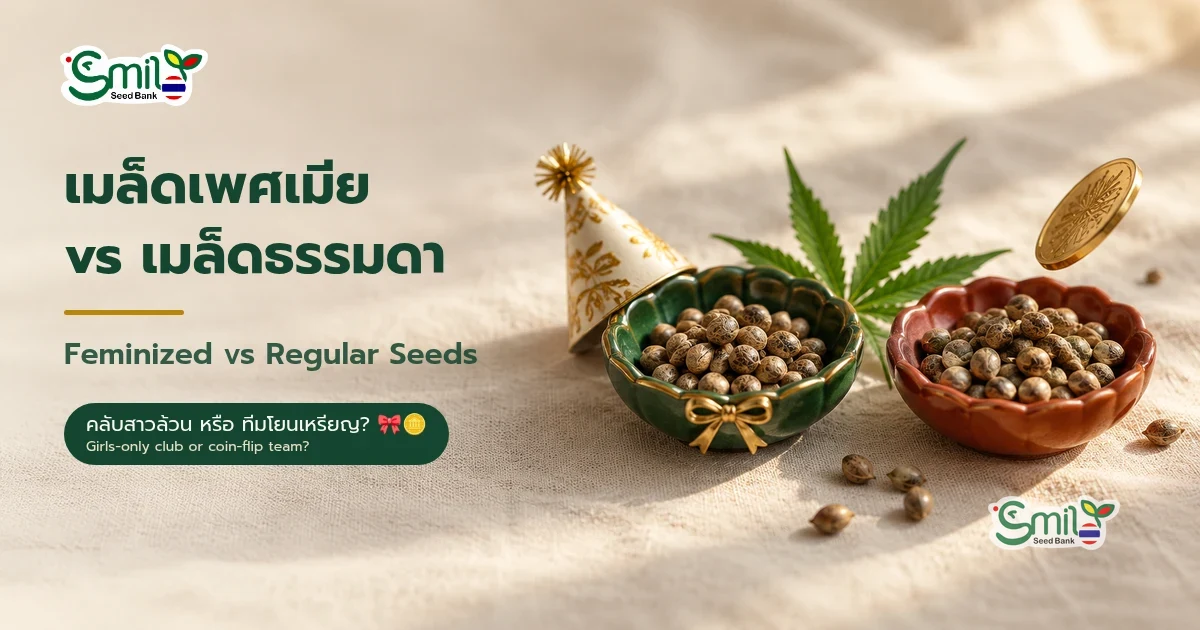
Picture this: you've got a fresh little pack of seeds, a notebook full of plans, and a name already picked for your first plant. Then a friend leans over and asks, "Wait, are those feminized or regular?" You nod confidently. Inside, you're thinking: plants have genders?
Good news: they do, and it's way more interesting than it sounds. Grab a coffee, and let's untangle feminized vs regular seeds in plain, friendly language, with real science behind every claim.
Meet the Plant: Cannabis Is a "Boys' Team, Girls' Team" Species
Cannabis sativa is normally dioecious. Fancy word, simple idea: each plant usually plays for one team, either male (producing pollen) or female (producing flowers that can form seeds).
Most collectors and growers are rooting for Team Female, because those are the flowers people care about. That's exactly why seed type is such a big deal.
The XY System: Biology Class, but Make It Quick
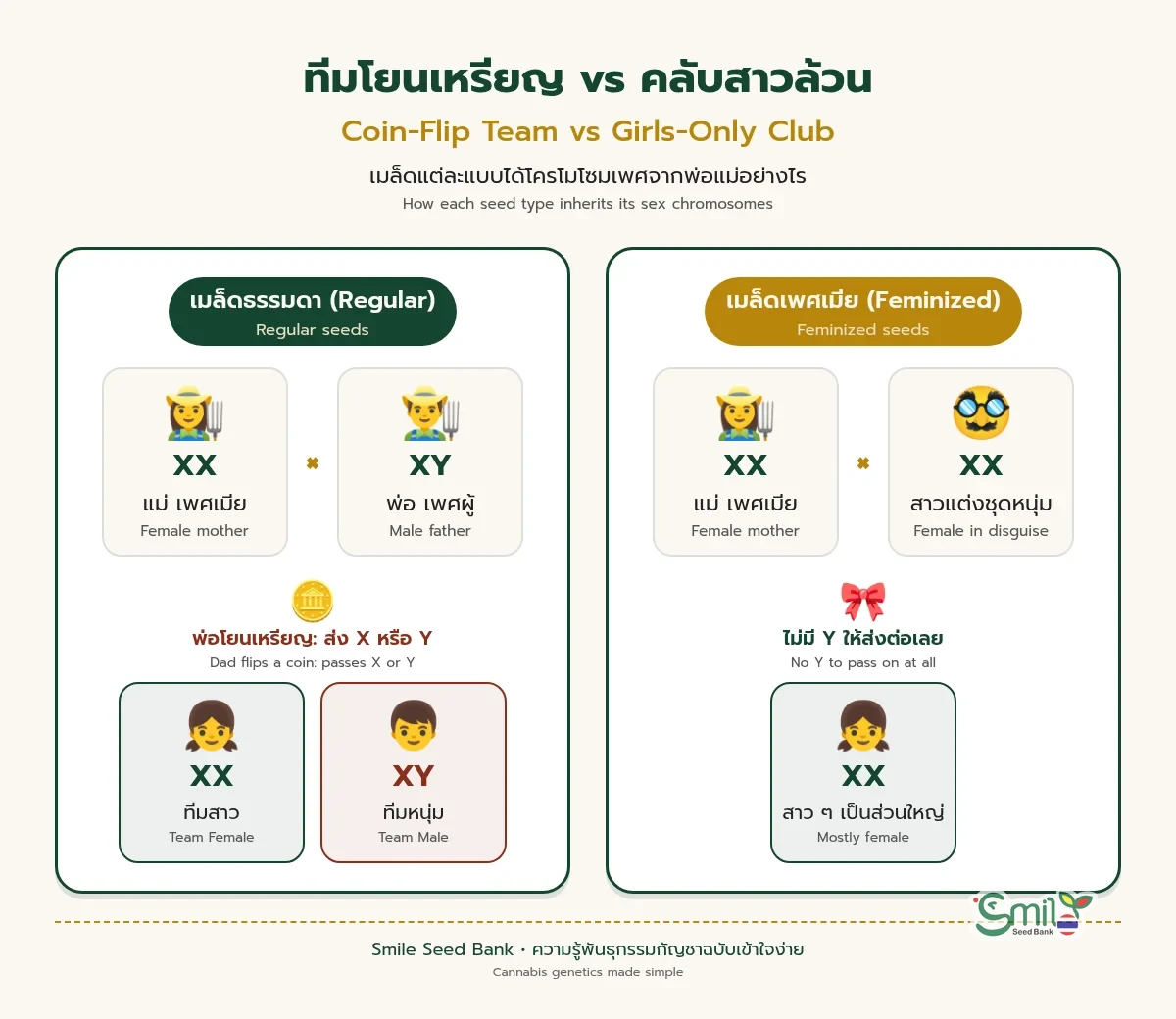
Researchers using molecular cytogenetics found that cannabis uses an XY sex-determination system, a bit like humans: females are typically XX, males XY.
Think of a regular seed batch like a coin toss from the father plant: each seed inherits either an X or a Y, so you naturally get a mix of boys and girls.
Quick tip: "Regular" doesn't mean "basic". It just means nature gets to pick the team.
Hermaphroditism: When a Plant Can't Pick a Side
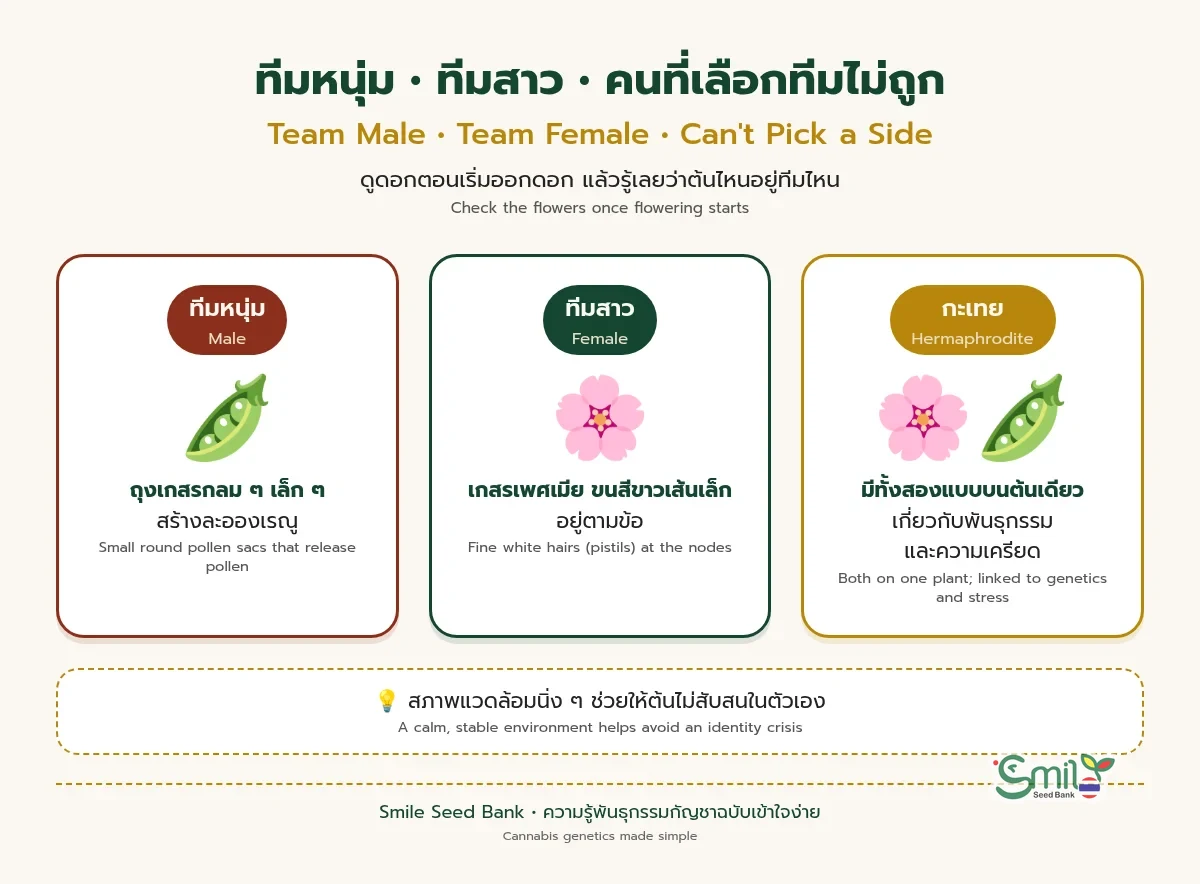
Plant sex isn't always set in stone. Some female plants decide to grow a few male flowers too, becoming hermaphrodites (also called intersex or monoecious expression).
Studies link this to genetics and environmental stress. In other words, a stressed plant can get a bit dramatic. Those surprise male flowers can pollinate the plant itself and its neighbors, leaving you with seeds you never asked for.
Quick tip: A calm, stable environment keeps your plants from having an identity crisis.
Regular Seeds: The Classic, Natural Mix
Regular seeds come from the old-fashioned love story: one female plant, one male plant. Their offspring can be either male or female.
Why Regular Seeds Are Still the Breeder's Best Friend
Breeding: many traditional breeding programs need true males. No boys, no next generation of crosses.
Mother plants: breeders often go "talent scouting" in regular populations to find standout females.
Genetic diversity and stability: regular lines keep natural male–female genetics intact, which many breeders value for long-term line development.
Feminized Seeds: The "Girls Only" Club
Feminized seeds are made so that offspring are predominantly female. Both parents are genetically female (XX), so there's simply no Y chromosome to pass along.
How Feminized Seeds Are Made (No Magic, Just Silver)
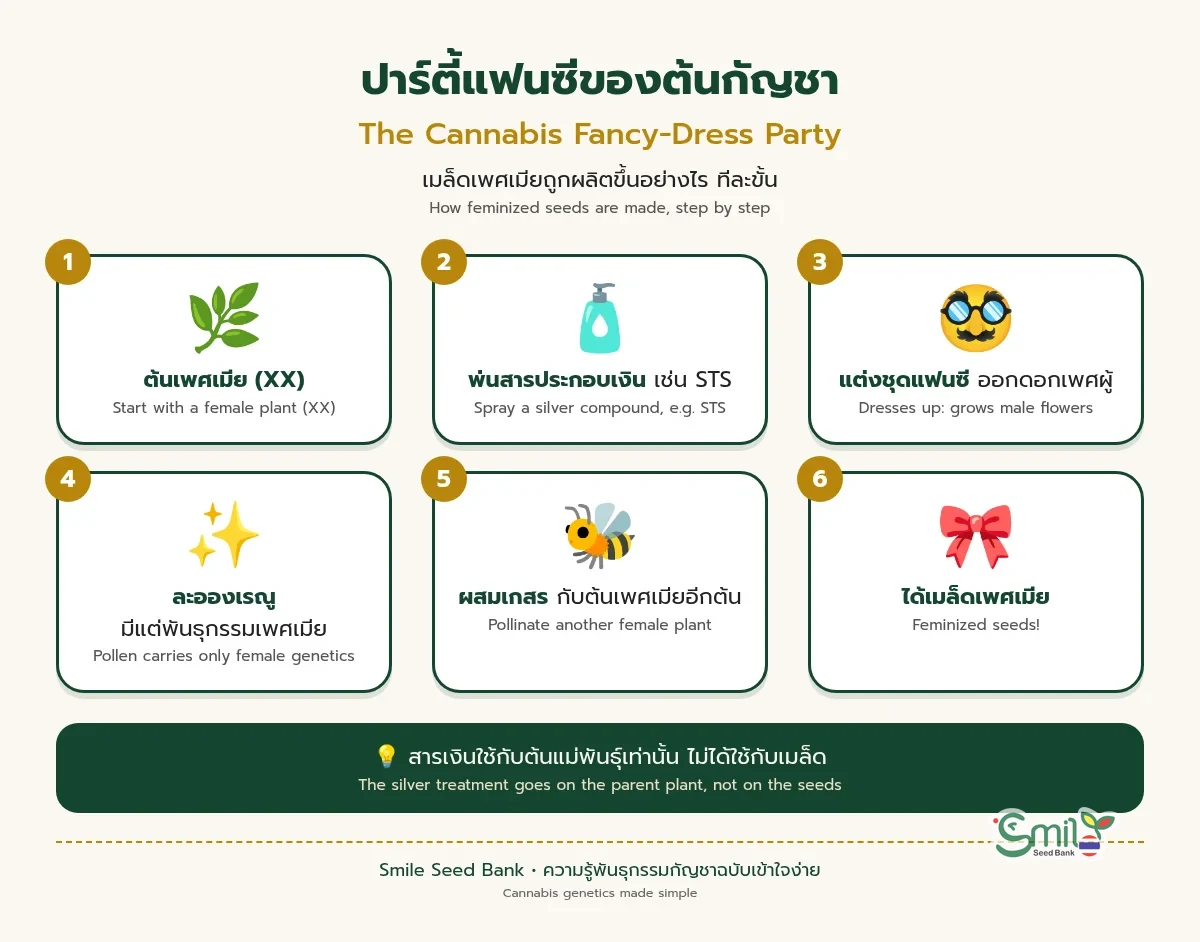
Breeders treat a female plant with a silver compound such as silver thiosulfate (STS); colloidal silver is another commonly used source of silver. Peer-reviewed research shows that STS foliar sprays convince female plants to produce male flowers.
It's a bit like a costume party: the plant dresses up in male flowers, but underneath it's still all girl genetics. The pollen from those flowers carries only female genetics, so when it pollinates another female, the resulting seeds are feminized.
Quick tip: The silver treatment goes on the parent plant, not on the seeds you buy.
Feminized vs Regular: The Side-by-Side Showdown
Feature | Feminized seeds | Regular seeds |
|---|---|---|
Parents | Two female plants (one induced to make pollen) | One female and one male plant |
Expected offspring | Mostly female | Mix of male and female |
Sex chromosomes passed on | X only | X or Y |
Best suited for | Collectors and beginners who want female plants | Breeders, mother-plant selection, preserving lines |
Male plants for breeding | Not available | Available |
Production method | Silver treatment (e.g., STS) to induce male flowers | Natural pollination |
Myth Busting: Things Your Uncle Might Have Told You
Myth 1: "Feminized seeds are lab-made GMO monsters."
Nope. Feminization changes how a female plant flowers for one generation; it does not edit DNA.
Myth 2: "Feminized means zero chance of male flowers, ever."
Not quite. Hermaphroditism can still pop up depending on genetics and stress, so keep an eye on your plants.
Myth 3: "Regular seeds are so last century."
Far from it. Regular seeds are still essential for breeding, finding mother plants and keeping genetic diversity alive.
Myth 4: "Feminized plants are the budget version."
Quality comes mainly from genetics and the breeder's selection, not simply from whether a seed is feminized or regular.
Frequently Asked Questions (FAQ)
1. What's the main difference between feminized and regular seeds?
Regular seeds can become male or female; feminized seeds come from female-only parents and are mostly female.
2. Which type is better for beginners?
Many beginners go feminized, because it skips the "is it a boy or a girl?" detective work and removing males.
3. Why would anyone choose regular seeds?
For breeding projects, picking mother plants, and keeping natural genetic diversity.
4. How can you tell male from female plants?
Once flowering starts, males grow small pollen sacs (think tiny balls), while females show pistils, fine white hairs, at the nodes.
5. Do feminized seeds contain chemicals?
The silver treatment is applied to the parent plant to produce pollen, not to the seeds themselves.
Summary: So, Which Team Are You On?
Cannabis is naturally dioecious with an XY system, so regular seeds give you both sexes. Feminized seeds are made by coaxing a female plant into growing male flowers, typically with silver thiosulfate, so the offspring are mostly female.
Want simplicity for your collection? Feminized is your friend. Dreaming of breeding your own line someday? Regular seeds are where the adventure starts.
Sources
Disclaimer: All seeds from Smile Seed Bank are sold as souvenirs for collection and educational purposes only. Buyers must be 20 years of age or older. It is the buyer's responsibility to check and comply with the laws of their own country or region. Smile Seed Bank is not responsible for any misuse.